What is invoice and accounting?
Invoicing and accounting are two basic things of financial management that help companies to track transactions, manage cash flows and ensure compliance with tax rules. While invoicing for invoices or services refers to the process of customers, accounting involves registration, reporting and analysis of financial transactions to maintain the general financial health of a business.
What is an Invoice?
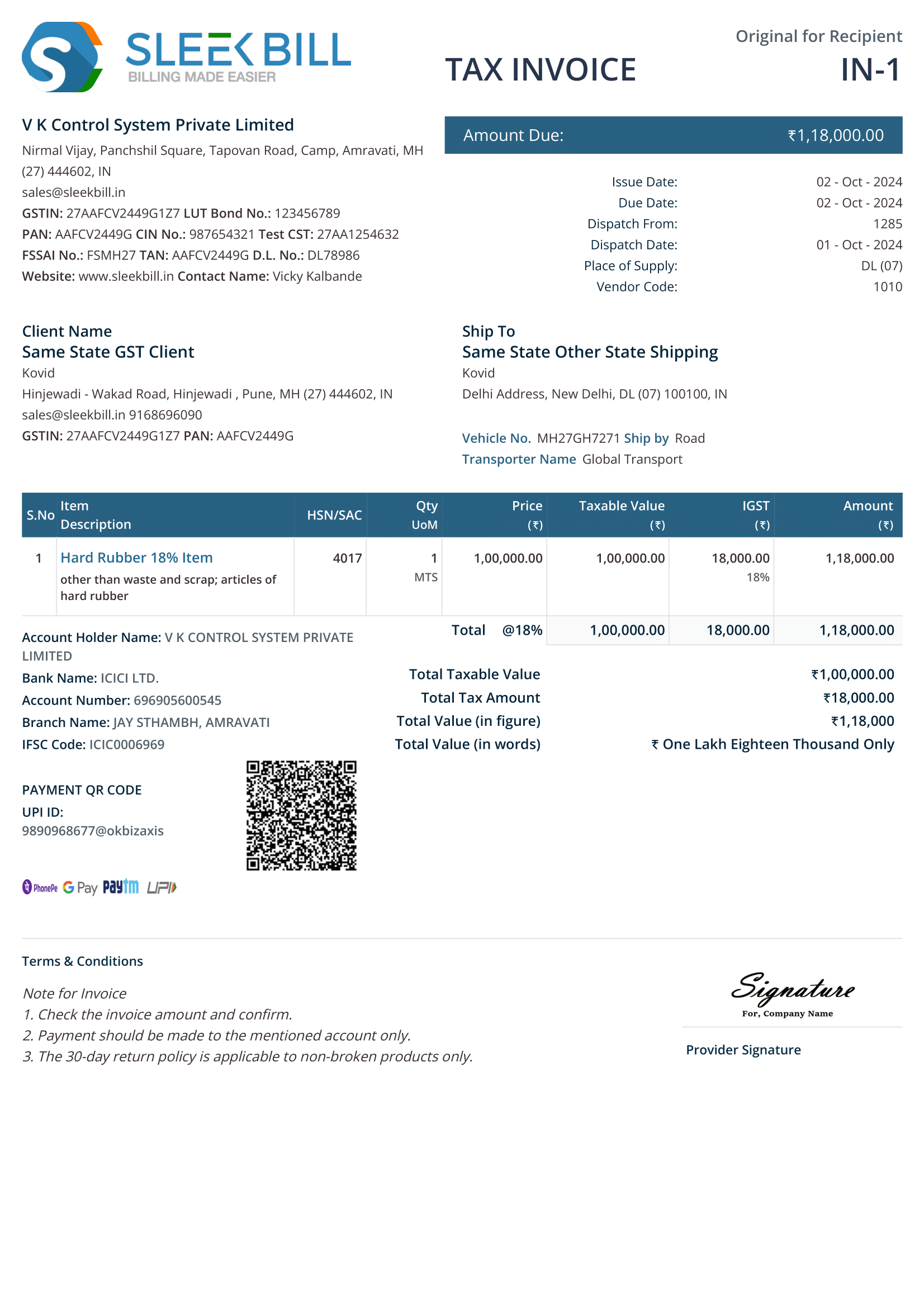
An invoice is a financial document given by a seller to a buyer, it mentions details of the goods or services provided, quantity, rates along with payment terms.
It serves as a formal request for payment and includes essential information such as
-
Invoice number
-
Date of issue
-
Business details (seller and buyer)
-
Itemized list of goods/services
-
Total amount payable
-
Payment terms and due date
Types of Invoices in Accounting
Businesses use different types of invoices in accounting based on the nature of the transaction:
Standard Invoice: A common invoice issued for completed sales.
Pro Forma Invoice: A preliminary bill issued before goods/services are delivered.
Credit Note: Issued when a refund or adjustment is required.
Debit Note: Used to increase the amount payable by the buyer.
Interim Invoice: Issued for ongoing projects requiring multiple payments.
Recurring Invoice: Used for subscription-based or regular payments.
How to Create a Quick Invoice with Sleek Bill?
Sleek Bill simplifies invoice generation with a user-friendly interface.
Here’s how to create an invoice quickly:
Login to your Sleek Bill account
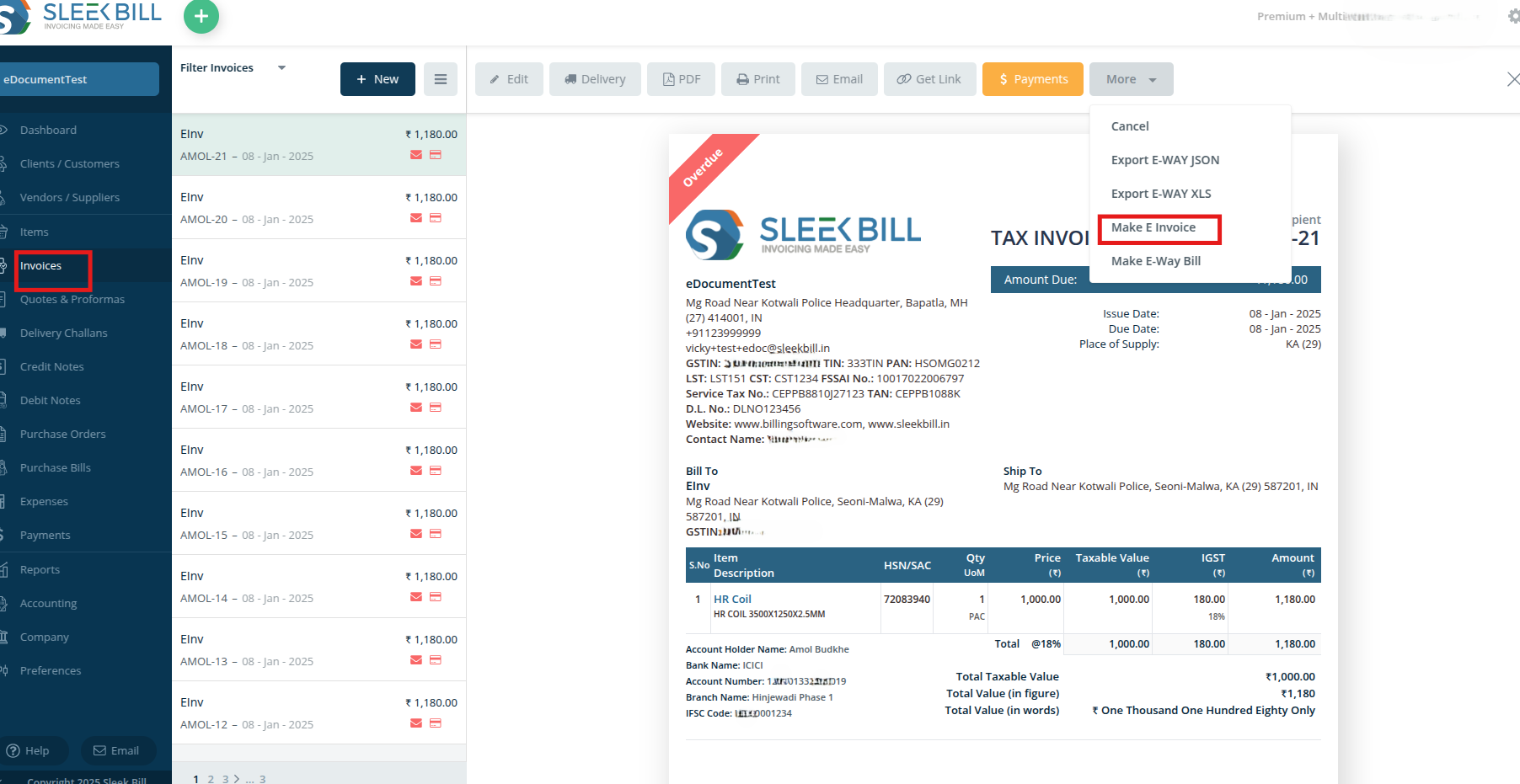
Click on Invoices; then click on New button
Select Client name , placee of supply, ship to address, due date, payment method , etc
Select Item details like items name ,qty, rate , discount, and tax rates.
Save and share the invoice via email or download it as a PDF.
Here your professional invoice ready to go
Key Features of Invoicing and Accounting Software
Modern invoicing and accounting software come with advanced features to streamline business finances:
Send Professional Invoices : Generate sleek, customized invoices effortlessly with automated templates.
Get Ready for E-Invoicing : Comply with government regulations by automating e-invoice generation and submission.
Multi-Currency Support : Expand globally by issuing invoices in multiple currencies.
Manage Returns and Refunds : Easily create credit notes and process refunds.
Cash Book Management Track cash transactions with a digital ledger for accurate bookkeeping.
Item Stock Ledger : Maintain an accurate stock inventory and monitor sales trends.
-
Profit and Loss Analysis: Understand business profitability with real-time financial reports.
Difference Between Invoicing and Accounting
| Feature |
Invoicing |
Accounting |
| Purpose |
Request payment for goods/services. |
Record and analyze financial transactions. |
| Document Used. |
Invoice, credit notes, debit notes. |
Balance sheets, income statements, tax records. |
| Focus |
Revenue tracking |
Overall financial management |
Three Categories of invoicing and accounting
-
1
Cost Accounting:
Focuses on cost control and budgeting.
-
2
Managerial Accounting:
Helps in right decision-making and financial planning and strategy.
-
3
Financial Accounting:
Involves preparing financial statements for regulatory compliance.
Why is It Important to generate Invoices Electronically?
Electronic invoicing (e-invoicing) reduce manual errors, ensures compliance, and speeds up the payment process. E-invoices can be generated using invoice management software, which automates ledger creation, revenue tracking, and financial reporting.
How Does Sleek Bill Simplify E-Invoicing?
Sleek Bill makes e-invoicing effortless with a simple step-by-step process:
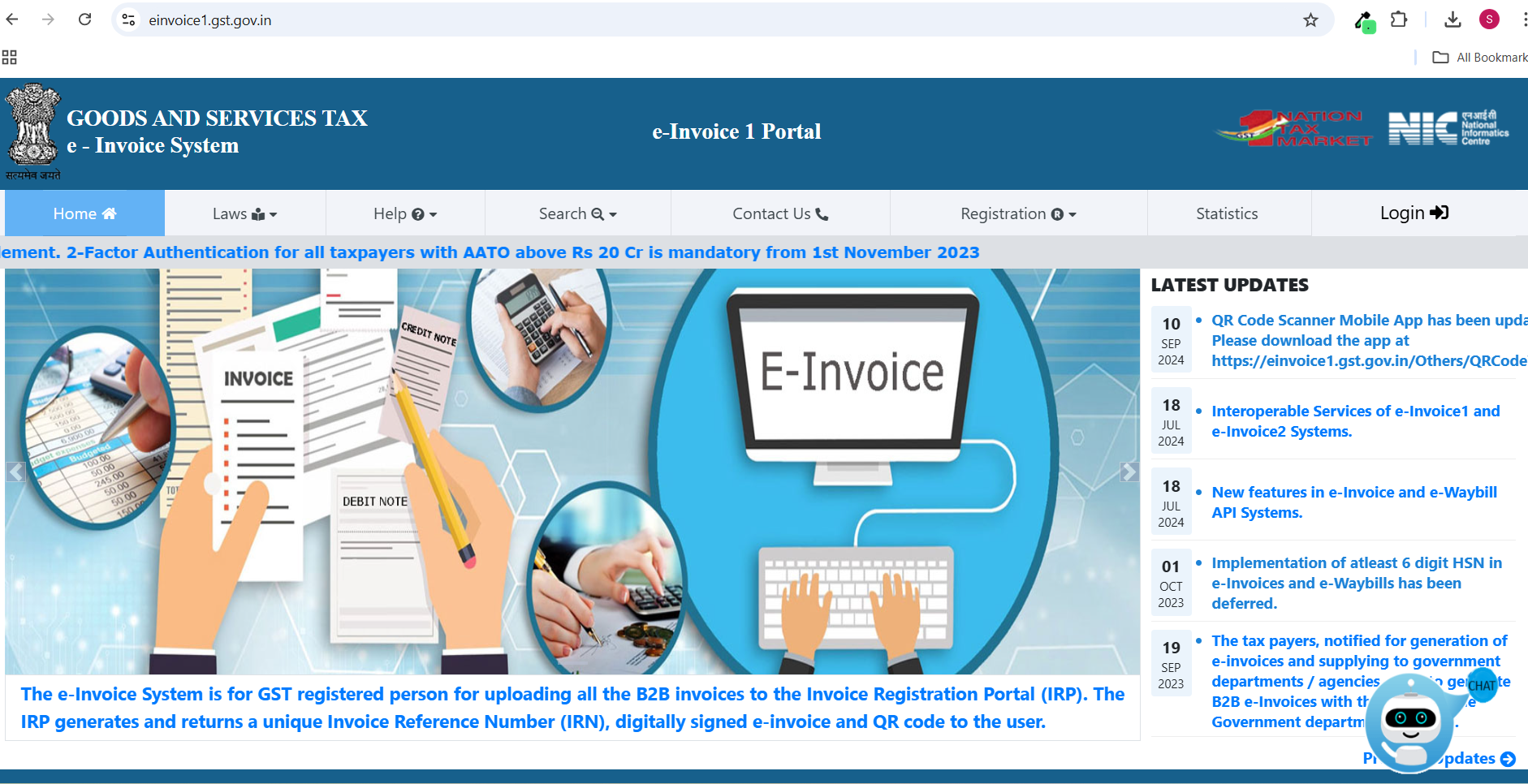
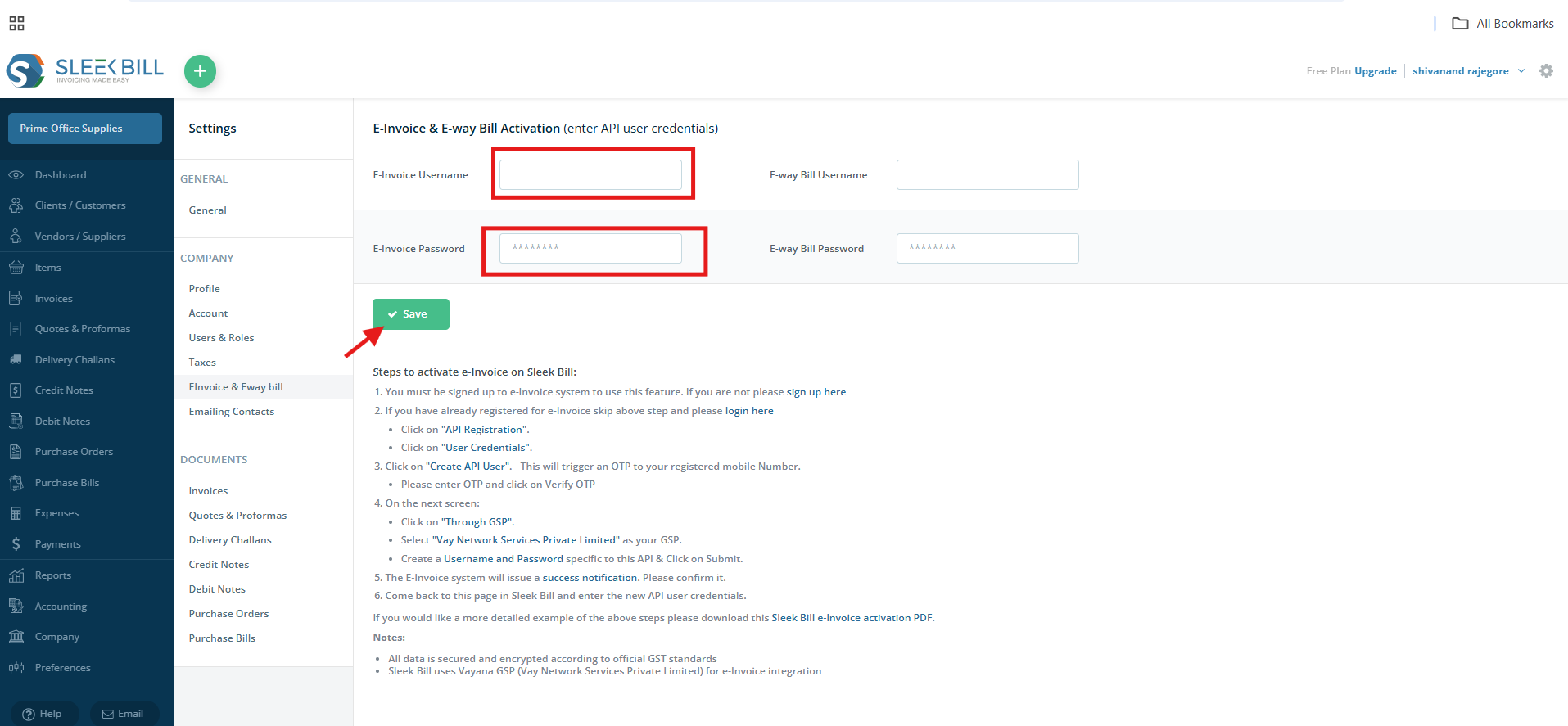
Create an API for e-invoice integration.
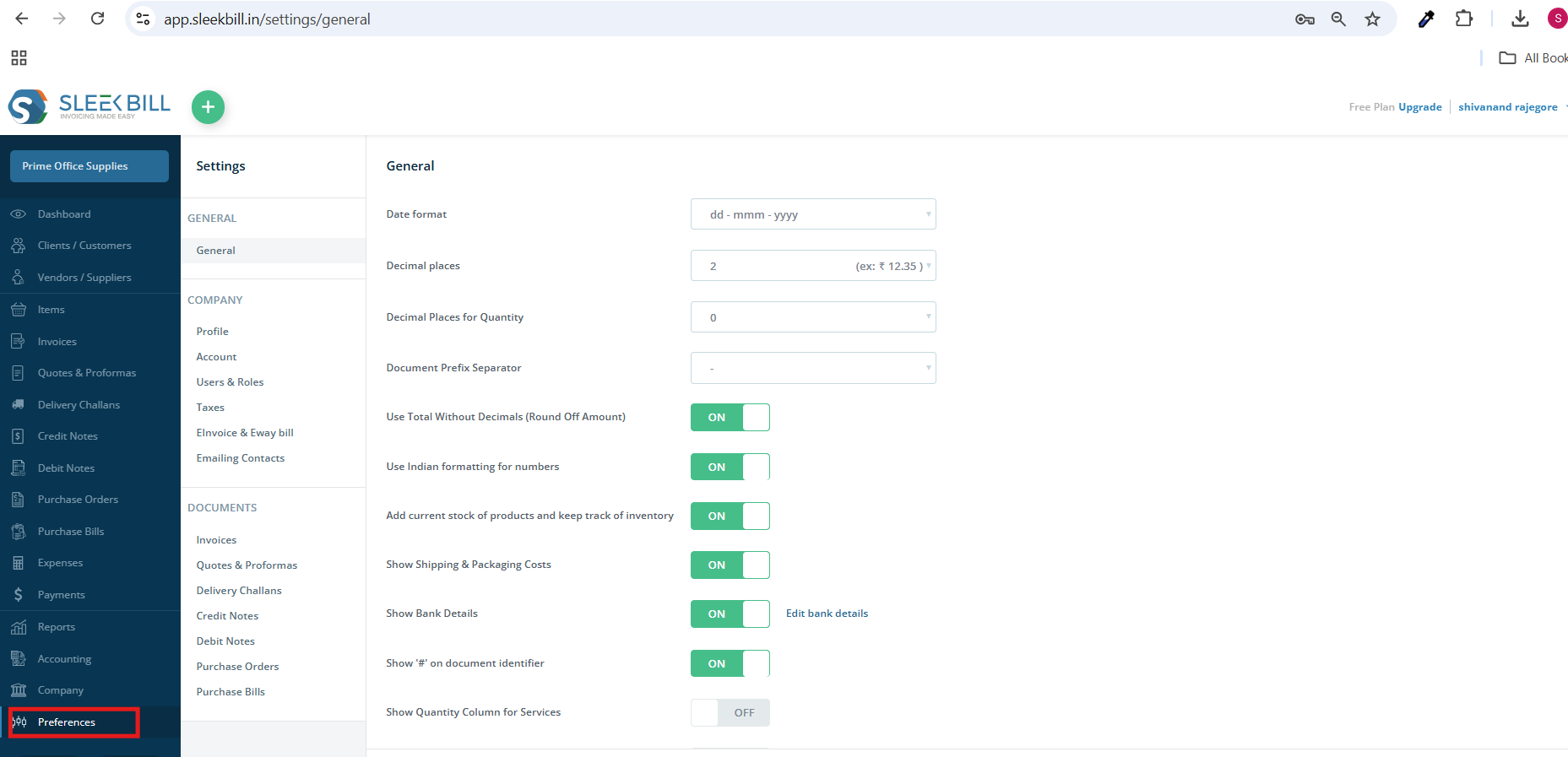
Login in Sleek Bill.
Go in Preferences section.
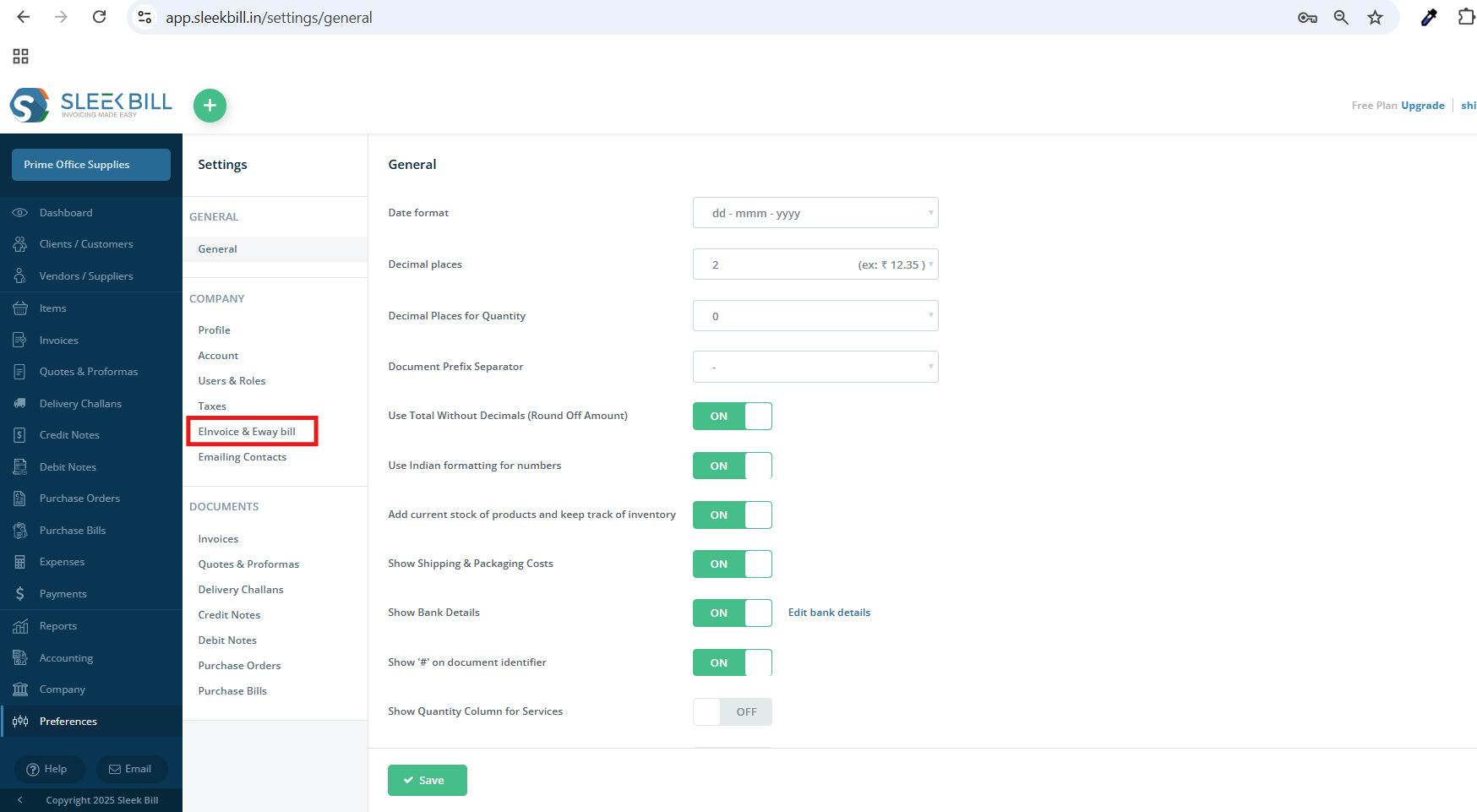
Click on E-invoice and E-way bill.
Save API User ID & Password in Sleek Bill.
Enable E-Invoice Option after creating a tax invoice.
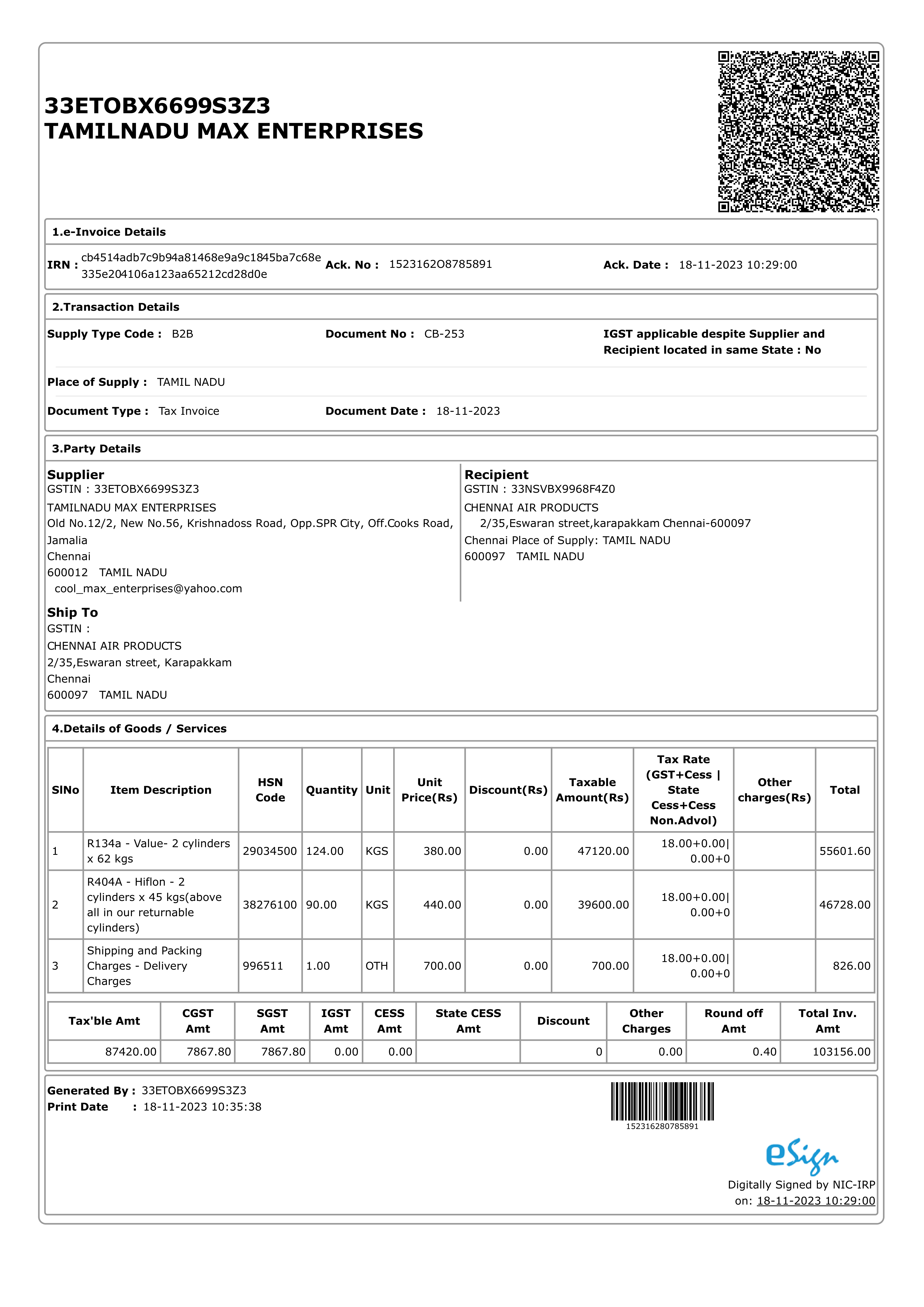
Generate E-Invoice with IRN number, acknowledgment number, and date.
Importance of Invoices in Accounting
Invoices play a crucial role in financial tracking and compliance:
Payment Records: Maintain a structured record of incoming payments.
Revenue Recognition: Helps in tracking earned income.
Expense Tracking: Ensures proper financial control.
Financial Reporting: Generates accurate reports for tax and auditing.
Credit Control: Helps in monitoring outstanding invoices.
Decision-Making: Provides insights for better financial planning.
Regulatory Compliance: Ensures adherence to tax and legal standards.
Accounting Software importance in India is practical for all possible organizations to maintain the financial accuracy, efficiency with GST compliance in business. A better choice is for small business owners, wholesalers, and manufacturers because software can simplify their entire financial operation. Go ahead and choose the most appropriate solution based on your industry and business needs!
 Call For Demo 9168696091/92/93







 Call Back Request

 GST Invoice Format
 GST Billing Benefits


 GST Credit Note
 GST Online Advantages





 Free training & support
 60K Happy Customers Worldwide
 Serious about