Digitize and simplify your financial data using XBRL a global standard for faster, accurate, and compliant reporting.
*Free & Easy - no hidden fees.
 Call For Demo 9168696091/92/93
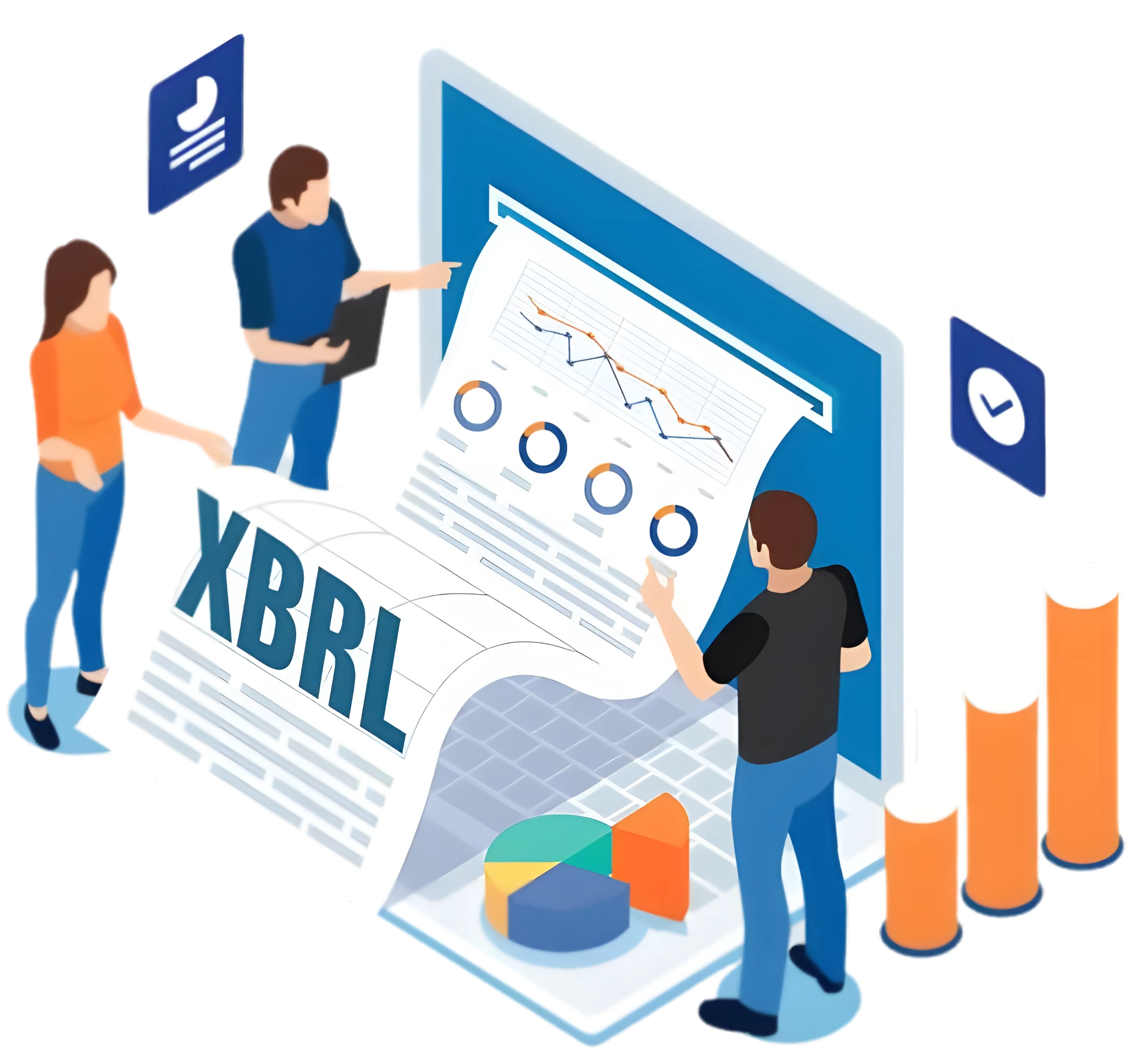







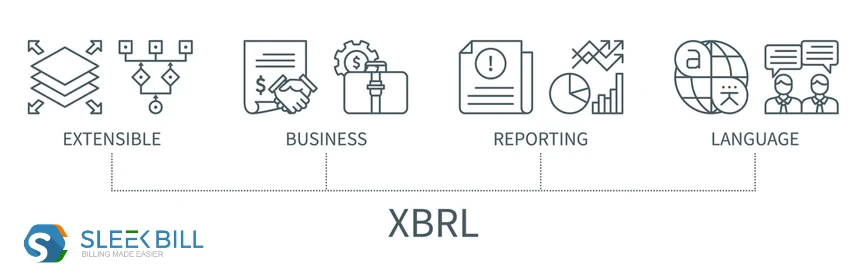
XBRL stands for eXtensible Business Reporting Language, it is a standardized markup language used to digitally tag and exchange the financial data. Developed by XBRL International, it enables financial statements and reports to be understand and readable to both human and machine.
Rather than presenting the data in static formats like PDFs or spreadsheets, XBRL uses tags to define each piece of data such as revenue, net profit, or liabilities makes it to easier for regulators, investors, and analysts to process and compare their information efficiently.
From a small businesses to the multinational corporations, XBRL is a transforming and checks how financial the statements being created, shared, analyzed, and compared, by providing increased transparency, regulatory compliance, and operational efficiency.
It Unlocks the Future of Digital Financial Reporting
In this digital age of finance, the traditional paper based financial reports is rapidly being replaced by standardized and machine-readable formats. One of the best revolutionary developments in this area is XBRL (eXtensible Business Reporting Language). It is a global language for the electronic communication of business and financial data.
XBRL is to accounting what HTML is to the internet - a universal language that simplifies how financial information is structured and shared.
With the standardized tags, the financial reports become more accurate and verifiable, and it enhancing the credibility of financial disclosures for stakeholders.
It Automates the data collection and reduces manual entry errors, there by it saves time and cost in reporting and auditing processes.
Financial data from different organizations, industries, or countries can be easily compared, without that of how or where the original reports were created.
Machine readable data enables the faster and more insightful automated financial analysis, that helps decision-makers react promptly.
XBRL supports various types of compliance standards like those from the SEBI, MCA (India), SEC (USA), and IFRS Foundation, making it easier for companies to meet their reporting obligations.

For adopting a Successful XBRL requires strategic planning and the right tools. Here's a simple roadmap:
Step 1: Understand Taxonomies
Taxonomies define the structure of financial data — think of them as dictionaries that XBRL software uses to tag elements. Use the appropriate taxonomy, such as Ind-AS Taxonomy for Indian companies or IFRS Taxonomy globally
Step 2: Choose XBRL-Compatible Software
Select financial reporting tools or accounting software (e.g., IRIS CARBON®, DataTracks, or Workiva) that support XBRL/iXBRL formats.
Step 3: Tagging Financial Statements
Map or “tag” each item in your financial reports to the relevant XBRL element from a taxonomy. For example, “Net Sales” may be tagged as Revenue.
Step 4: Validate the XBRL Output
Use validation tools to ensure your XBRL files meet technical and regulatory standards.
Step 5: Train Finance Teams
Equip your accounting staff with training on XBRL fundamentals and filing requirements to ensure smooth adoption.
The Ministry of Corporate Affairs (MCA) make’s mandatory of XBRL filing in financial statements for certain classes of companies under the Companies Act, 2013.
Companies that are listed on stock exchanges or having paid-up capital above specified thresholds are required to submit annual filings in XBRL format.
The US SEC requires XBRL and iXBRL filings for public companies under GAAP or IFRS.
ESMA (Europe) and other regulators have adopted XBRL-based reporting for greater standardization and compliance.
TCS adopted XBRL for its MCA filings, enabling faster, more accurate compliance and reducing auditor workload.
Infosys uses iXBRL (Inline XBRL) to publish its financials, making data accessible to both machines and human users in the same document.
| Traditional Reporting | XBRL Reporting |
|---|---|
| Manual data entry | Automated tagging |
| PDF/Excel formats | Machine-readable XM |
| Difficult comparisons | Easy benchmarking |
| Higher audit time | Faster verification |
XBRL is no longer the future, it’s a present standard of a modern financial reporting. With regulatory support and clear advantages in efficiency, accuracy, and compliance, adopting XBRL is a smart move for any business looking to streamline its accounting processes.
Whether you have a startup, SME, or a large corporate, implementing the XBRL can redefine that how you manage and present your financial data
 GST Export Invoice Format
Requirements for export invoice templates in GST.
 Credit Note Format
Why Need Credit Note?

Requirements for composition scheme documents.

GST features in online billing software.

Requirements for export invoice templates in GST.

Receipt of items or services for GST Exempt.

केंद्रीय वस्तु एवं सेवा कर

Receipt voucher record the receipt of payment.




The main purpose off XBRL in accounting is to standardize financial reporting so that data can be easily shared, validated, and analyzed across different systems.
Unlike static reports (PDFs), XBRL provides structured, digital data that is searchable, analyzable, and automatically processable.
Yes. With the availability of affordable and user-friendly XBRL tools, it suits even for small businesses and it can streamline compliance and enhance reporting accuracy.
Challenges include: Initial setup costs, Need for taxonomy knowledge, Training staff, Ensuring system compatibility
Resources: XBRL International, MCA India XBRL Portal, Training platforms like IRIS, CPA Journal, and DataTracks Academy
 Free training & support
 60K Happy Customers Worldwide
 Serious about Security & Privacy
Streamline Compliance | Boost Transparency | Drive Efficiency
or call +91 9168696092 for assistance..
 Call Back Request