
B2C is a model where businesses sell directly to individual consumers.
*Free & Easy - no hidden fees.
 Call For Demo 9168696091/92/93
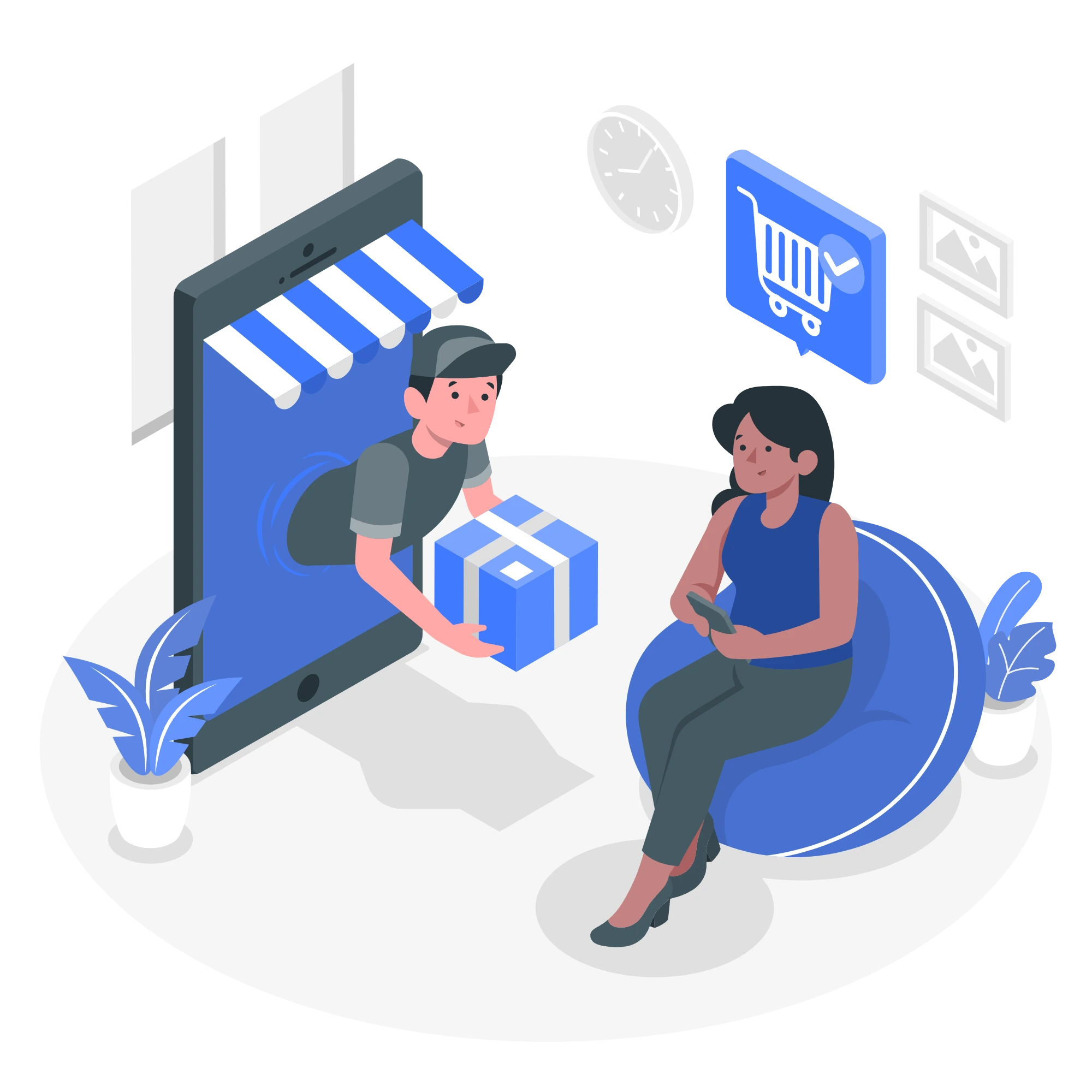





Any entrepreneur, marketer, or customer in today's digital-first world needs to grasp what a B2C (business-to-consumer) business is. This tutorial explains the fundamentals of B2C (business-to-consumer), commonly referred to as the retail business model, and why it is so important to the global economy, regardless of whether you are launching an online store or are just interested in contemporary commerce trends
Customers may buy products or services from online businesses that employ the (B2C) model.B2C enterprises clients who buy goods for their own use, as compared to B2B (business-to-business) to other businesses. These days, most B2C companies run almost everything online—except for things like shipping and delivery. This setup makes it super convenient for both shoppers and sellers to connect and do business anytime, anywhere.
Called Retail Business: It focuses on the final buyer, often in smaller quantities.
Fast-Growing Sector: B2C ecommerce is one of the fastest growing sectors in the global economy.
Internet-Driven: Ecommerce sales happen almost entirely over the internet, offering convenience and flexibility.
24/7 Accessibility: B2C ecommerce gives sellers and buyers the comfort and freedom to make transactions anytime and from anywhere.
Simplified Experience: There’s increased ease of both buying and selling online, as compared to traditional sales.
Direct Sellers: Online retail stores that sell products either under their own brand or offer a variety of brands. For example:These stores may be brand-specific or multi-brand marketplaces
Online Intermediaries: Platforms that connect businesses with customers without owning any product or service. Their role is purely facilitative.Example: Etsy allows individual creators and small businesses to showcase and sell their products directly.
Advertisement-Based B2C: These platforms don’t sell products directly. Instead, they sell advertising space to other business enterprises to make money.The Guardian and the Huffington Post are two examples.Their primary service is content, and their influence draws attention to advertisers.
Choose the right model: These businesses leverage niche online communities or forums to promote their offerings.Example: Facebook groups aligned with hobbies or interests where businesses pitch relevant products.
Fee-Based B2C: Such platforms charge customers a subscription or fee to access their services.Examples: Netflix, Amazon Prime, Hulu, Medium.Revenue is generated through user subscriptions rather than direct product sales.
Reach More Customers: With a physical store, you're often limited to local foot traffic. But putting your business on the internet makes it available globally. Now:Your primary audience becomes everyone online.No dependency on geography or time zones.
Reduce Overhead Costs: Traditional brick-and-mortar stores face high fixed costs:Rent, salaries, property tax, utilities, insurance, etc.Even inventory-related costs can spike due to warehousing.
With B2C ecommerce: You can run a store entirely online, drastically reducing overhead.Smaller teams and lower infrastructure needs increase profitability.Actionable Insights for Aspiring B2C Entrepreneurs
Choose the right model: Are you a direct seller, intermediary, or ad-based business? Identify your niche and audience.
Assess UX/UI: Make your e-commerce platform is easy to use and adapts to both desktop and mobile mobile devices.
Invest in SEO and Digital Marketing: Social media, SEO, and content marketing to drive traffic to your online store.
Simplify logistics: labor with reputable shipping companies to effectively send orders.Utilize analytics to continuously enhance your tactics by monitoring visitor behavior, sales performance, and conversion rates.
The B2C Industries Future: A evolving climate due to increasing internet usage and smartphone use, there have been no signs that B2C e-commerce is slowing down.Consumer expectations are rising as a result of emerging technologies like chatbots, augmented reality shopping, and AI-powered modification. A 2024 Statics believe suggests global B2C e-commerce earnings will reach $6.3 trillion by 2025.
In digital age, understanding what B2C (business-to-consumer) means is key.The B2C model gives you a powerful way of proving links directly with customers, whether you're growing your brand and keep up of market developments.It offers shorter reach, lower cost, and faster growth. You can find some great opportunities for growth in this changing businesses with a strategy, smart tools, and grasp of the types of e-commerce.
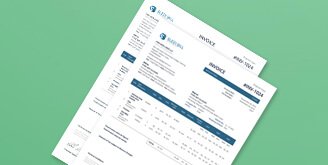 GST Export Invoice Format
Requirements for export invoice templates in GST.
 Credit Note Format
Why Need Credit Note?
Requirements for composition scheme documents.
GST features in online billing software.
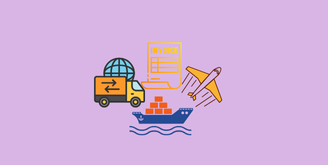
Requirements for export invoice templates in GST.
Receipt of items or services for GST Exempt.
केंद्रीय वस्तु एवं सेवा कर
Receipt voucher record the receipt of payment.




Business-to-Consumer, or B2C, refers to the practice of businesses selling directly to consumers rather than other businesses. This is the standard retail paradigm found in physical stores and online marketplaces such as Amazon.
B2B transactions take place between corporations, whereas B2C interacts with individual customers. B2C purchases are usually motivated by emotions and have shorter sales cycles.
Etsy, Amazon, Flipkart, and Netflix are the most well-known B2C e-commerce sites.Some of popular B2C e-commerce sites are Etsy, Amazon, Flipkart, and Netflix.
Key technologies include website builders, payment gateways, CRM tools, SEO platforms, analytics tools, chatbots, and mobile-friendly interfaces
Very important—over half of ecommerce traffic comes from mobile. A mobile-friendly site improves user experience and conversion rates.
 Free training & support
 60K Happy Customers Worldwide
 Serious about Security & Privacy
B2C enables direct customer engagement, driving faster growth and lower costs.
*Free & Easy - no hidden fees.
 Call Back Request