
Understanding Standard Invoices and Tax Invoices for Easy GST Compliance
*Free & Easy - no hidden fees.
 Call For Demo 9168696091/92/93
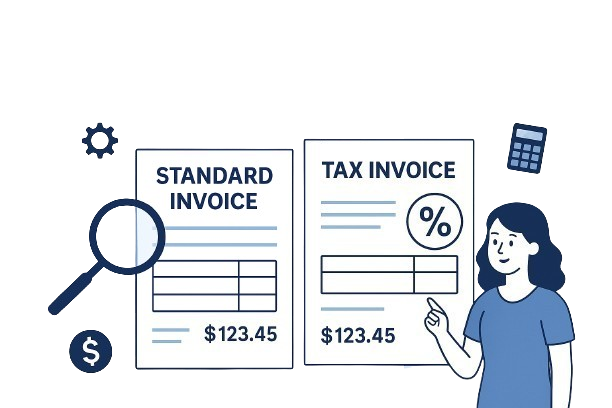






Understanding invoice is essential for businesses operating under the Goods and Services Tax ( GST) governance in India. Invoice serve as proof, transactions clearly and ensuring compliance with GST regulations. This guide explains in detail the two primary types of GST invoice — Standard Invoice and Tax Invoice — and why they are important.
An invoice is a document handed by the dealer to the buyer, detailing the goods or services delivered, costs involved, payment terms, and other transaction information.
It acts as:
Recordkeeping: Maintains clear records for buyers and sellers.
Payment Tracking: Helps businesses track payments due and received.
Legal Documentation: Provides legal proof of agreed terms and prices.
Tax Compliance: Essential for filing taxes accurately.
Business Analytics: Offers precious data for sales analysis and business performance.
A valid GST invoice should include:
Clearly displayed word "INVOICE"
Unique invoice number
Date of issue and date of delivery
Seller’s and buyer’s details (names, addresses, GSTIN)
Description and quantity of goods/services
Price per unit
Applicable tax rates and total tax amount
Total payable amount with currency
Terms and conditions of sale
A standard invoice, also known as the final invoice, is commonly used across various industries and businesses, regardless of GST registration status.
Key features include:
Clearly indicates transaction completion and payment due.
Contains details like invoice date, invoice number, product/ service description, amounts, unit rates, total due amount, and payment options.
Helps expedite payment processing when promptly issued after delivery.
Ensures accurate accounting records and tax compliance.
A tax invoice is specifically issued by GST-registered businesses for taxable goods and service. It allows buyers to claim Input Tax Credit (ITC) under GST.
Key features include:
Seller's and buyer’s GSTIN numbers.
Detailed product/service description along with HSN code.
Clear breakdown of taxable value, applicable tax rate, and GST amount.
Invoice date and unique invoice number for reference and compliance.

Accurate invoicing under GST offers significant benefits:
Avoid Penalties: Compliance with GST regulations prevents economic penalties and legal issues
Smooth Filing Process: Facilitates accurate and timely GST return filings and tax audits.
Improve Cash Flow: Timely and precise invoices improve payment cycles and cash flow management.
Sleek Bill invoicing and GST compliance by:
Accurate invoice generation.
Facilitating instant updates in accounting records.
Ensuring error-free tax calculations and compliance with GST invoicing norms.
Enhancing business productivity and maintaining financial growth.
Understanding the two types of invoices in GST — standard and tax invoices is critical for maintain business operations and compliance with Indian tax laws. Using dependable billing tools like Sleek Bill can streamline invoicing processes, enhance compliance, and optimize financial operation.
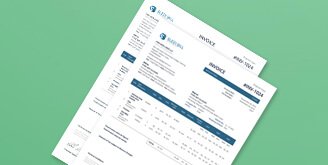 GST Export Invoice Format
Requirements for export invoice templates in GST.
 Credit Note Format
Why Need Credit Note?

Requirements for composition scheme documents.

GST features in online billing software.
Requirements for export invoice templates in GST.
Receipt of items or services for GST Exempt.
केंद्रीय वस्तु एवं सेवा कर

Receipt voucher record the receipt of payment.




Standard Invoice: General document indicating transaction details and payment due, used by all businesses.
Tax Invoice: Specifically required for GST-registered suppliers to enable buyers to claim Input Tax Credit. .
Only GST-registered suppliers can issue a tax invoice for taxable goods or services.
Accurate invoicing ensures compliance, avoids penalties, supports smooth duty form, and improves business analytics and cash inflow.
 Free training & support
 60K Happy Customers Worldwide
 Serious about Security & Privacy
Stay GST-compliant with ease! Learn the difference between tax invoices and bill of supply — so your small business stays on the right track, effortlessly.
*Free & Easy - no hidden fees.
 Call Back Request