E-Way Bill: Applicability and Generation Simplified
E-Way Bill system is one of the prime constituent elements of the India Goods and Services Tax (GST) compliance regime. It will provide hassle-free movement of goods and is applicable for intra-state as well as inter-state transport when consignments amount to value more than ₹50,000.
Let us now explore into specific usage of E-Way Bills along with their applicability and modes of generation excluding exceptions.
What is an E-Way Bill?
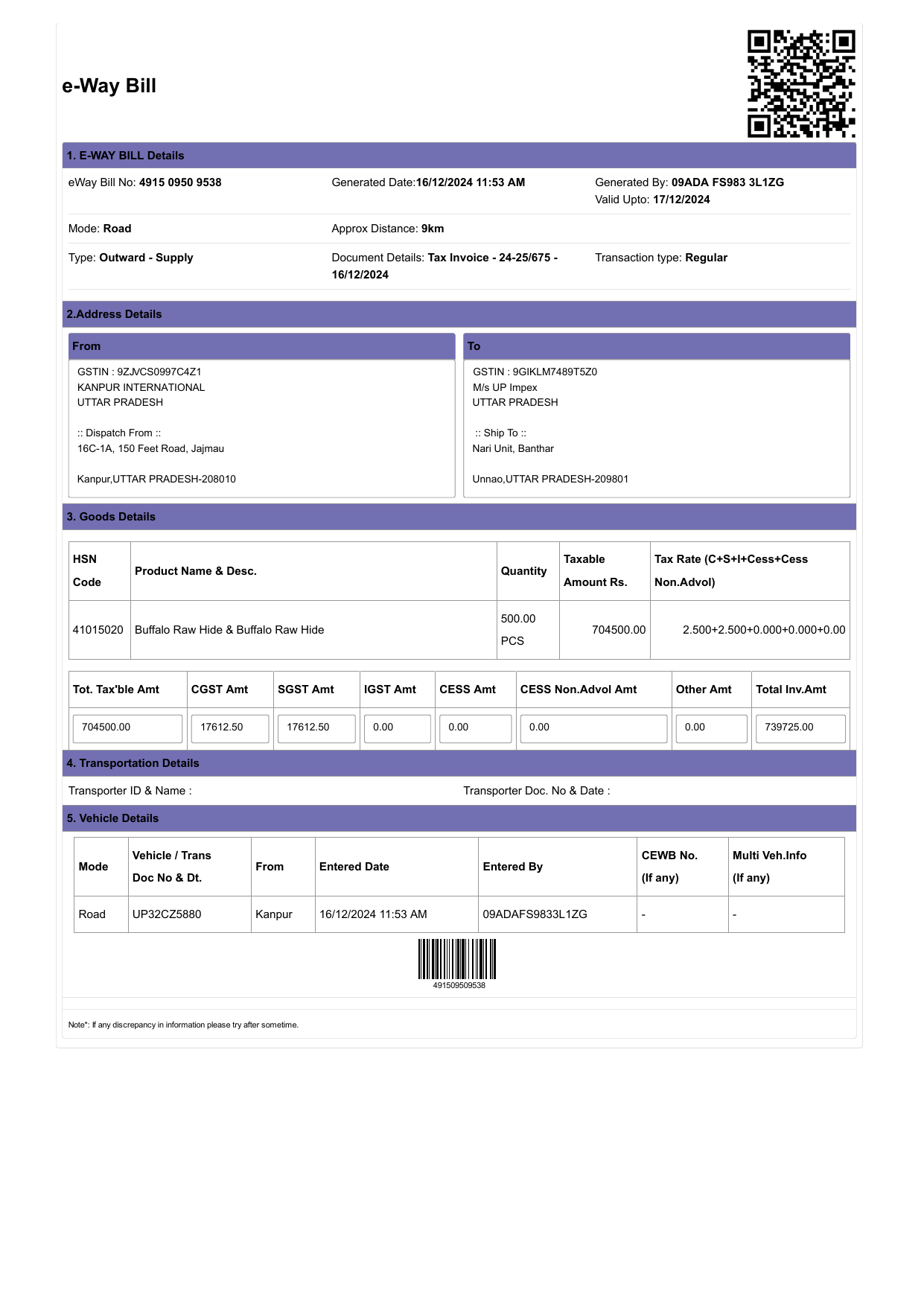
An E-Way Bill is a mandatory document required for the transportation of goods under GST. It is electronically generated through the GST portal and contains critical details like:
- Type of goods, HSN code, and taxable value.
- Details of the consignor, consignee, and transporter.
- Vehicle number and transport document references.
Components of an E-Way Bill
Part A:
- Recipient's GSTIN.
- Delivery details (address and PIN code).
- Invoice or challan number.
- HSN code and value of goods.
- Reasons for transportation.
Part B:
- Transporter details including vehicle number or Transporter ID.
Who Can Generate an E-Way Bill?
- Consignor/Consignee: Registered individuals or entities moving goods in their own or hired vehicles, or through air, rail, or waterways.
- Transporters: When consignor/consignee does not generate the bill, transporters are responsible for doing so.
- Unregistered Persons: Can enroll on the E-Way Bill portal to generate bills for their goods.
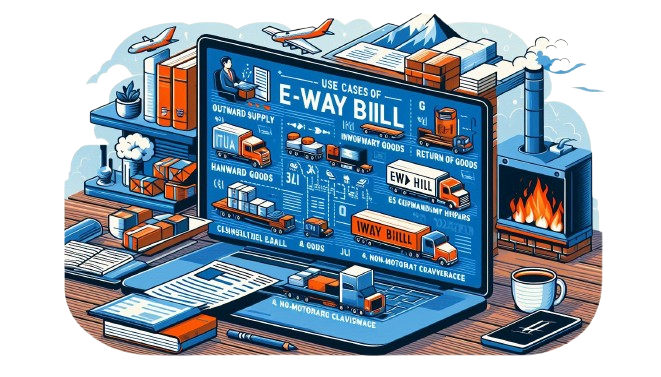
Specific E-Way Bill Use Cases
Example: A retailer shipping products to a distributor.
The supplier generates the E-Way Bill under GST compliance.
Example: A manufacturer receiving raw materials from a supplier.
The supplier generates the bill, or the recipient does if the supplier is unregistered.
Example: Transporting garments to a tailor for alterations.
An E-Way Bill is generated if the consignment value exceeds ₹50,000.
Example: Returning defective products to a supplier.
The consignee creates the E-Way Bill for this reverse movement.
Mandatory E-Way Bill generation for inter-state movement, regardless of value.
Scenario: A transporter carrying multiple consignments in a single vehicle.
The transporter generates a consolidated E-Way Bill, referencing individual bills.
Goods moved by non-motorized transport (e.g., carts) are exempt from E-Way Bills.
Exporters generate E-Way Bills for transporting goods to ports.
Importers must generate bills for moving goods from ports to their facilities.
How to Generate an E-Way Bill?
Steps for E-Way Bill Generation on the GST Portal:
-
-
Select Generate New under the E-Way Bill menu.
-
Fill in Part A (goods and recipient details) and Part B (transporter/vehicle details).
-
Click Submit to generate a unique 12-digit E-Way Bill.
Using Sleek Bill for E-Way Bills:
- Log in to Sleek Bill software
- Create a new invoice or open an existing one.
- Export the invoice as an E-Way JSON file.
- Upload the file to the GST portal for E-Way Bill generation.
When Is an E-Way Bill Not Required?
An E-Way Bill is not required in the following cases
The value of consignment is less than ₹ 50,000 (other than for mandatory categories of handicrafts).
Goods moved by carts, bicycles etc. on non motorised vehicles
Movement of goods under customs supervision or bond.
Transported by rail by government authorities.
Goods transported to a weighbridge within 20 km under a Delivery Challan.
Validity of E-Way Bill
- Valid for 1 day for distances up to 200 km.
- Add 1 day for every additional 200 km.
-
Over-Dimensional Cargo (ODC):
- Valid for 1 day for distances up to 20 km.
- Add 1 day for every additional 20 km.
Can an E-Way Bill Be Canceled?
Yes, it can be canceled if:
- Goods are not transported
- Incorrect details are entered in the bill.
-
Cancellation Steps:
- Cancel the bill within 24 hours of generation on the GST portal.
- Note: A bill cannot be canceled if it has already been verified during transit.
Benefits of E-Way Bill for Businesses
- Compliance: Ensures adherence to GST regulations.
- Efficiency: Speeds up logistics with digital verification.
- Transparency: Tracks goods movement in real-time.
- Reduced Costs: Eliminates delays at checkpoints, lowering operational costs.
This system forms an important mechanism under the GST system to allow smooth movement of goods. Whether outward supply, job work, or even inter-state transfers are on the anvil, different use cases reflect a fair bit of versatility and indeed necessitate E-Way Bills.
When businesses understand the process, they are assured of complying with all regulations, reducing logistical delays, and improving operational efficiency.
To discover a seamless experience in generating and managing E-Way Bills, explore Sleek Bill's complete GST solutions today!










 GST Invoice Format
 GST Billing Benefits





 Free training & support
 60K Happy Customers Worldwide
 Serious about