for revenue growth strategies
*Free & Easy - no hidden fees.
 Call For Demo: 9168696091/92/93







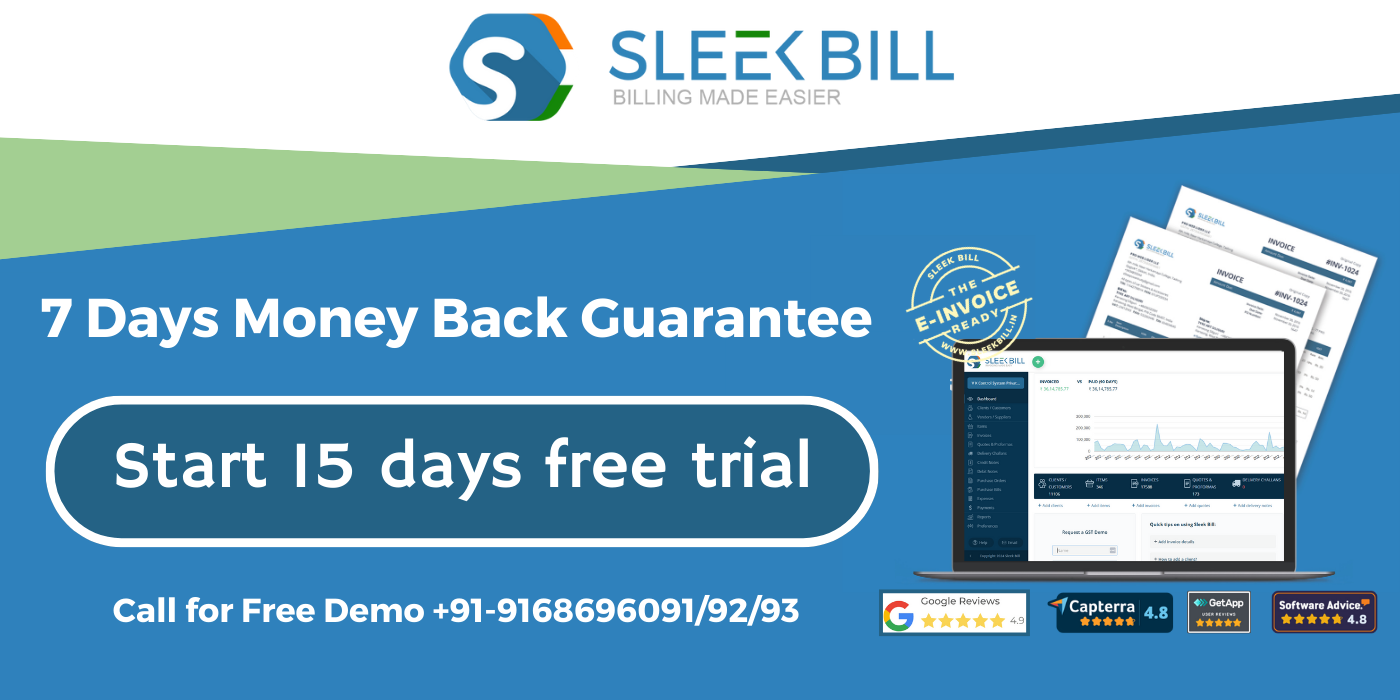
Revenue is one of the most important financial metrics running in every business operation. Knowledge over
what revenue really is and how it is computed will affect the decisions and general financial health of your business.
Revenue in business is defined as the income generated from selling goods or services by a company in addition to the costs and expenses nixed; this should be within normal business activity. Revenue is purely described as the
gross income of the company. Some refer to it as "top line" as it is somewhere at the top of the profit and loss statement, indicating that it is the principal form of income.
Proceeds from the sale of goods or services to customers, service income, interest income, or rent income may result from varied kinds of business activities. Revenue in business is, therefore, the measure by which the company is able to make a good assessment of its standing in the marketplace, its present and future financial health, and also the overall health of the company.
Represents gross earnings.
Recorded over a specific period (monthly, quarterly, annually).
Crucial for calculating profitability and business growth.
Revenue can broadly be categorized into two types:
Operating revenue refers to income generated from your company's primary business activities.
Examples include:
Sales revenue from goods sold.
Service fees for services rendered.
Non-operating revenue is income generated from secondary activities outside core business operations.
Examples include:
Interest revenue from investments.
Dividend income from stock holdings.
Rent revenue from leasing properties or equipment.
Calculating revenue accurately is fundamental. The standard formula for revenue is:
| Net Revenue = (Quantity Sold × Unit Price) – Discounts – Allowances – Returns |
Quantity Sold: Number of units sold.
Unit Price: Sale price per unit.
Discounts: Price reductions offered to customers.
Allowances: Deductions due to minor defects or other issues.
Returns: Goods returned by customers.

Consider Microsoft, a global technology giant. Its diverse revenue streams include:
Productivity and Business Processes: Revenue from Office products and LinkedIn.
Intelligent Cloud: Income generated from cloud services.
More Personal Computing: Revenue generated from Windows, Xbox, and Surface products.
These diverse sources illustrate how a company can build a robust revenue portfolio.
Although revenue and profit are closely related, they do differ:
Revenue is all money collected before expenses.
Profit or net income is the leftover component of revenue after all the costs, expenditures, and taxes are accounted for.
Revenue in business indicates a company's status in the market, while profit is an indicator for its financial and economic sustainability by that same company.
Revenue is considered a very important parameter to assess success in business for the following reasons:
It measures market demand for products/services.
It supports cash flow management and budgeting.
High revenue provides resources for expansion and growth.
It attracts investors and improves business valuation.
Market Expansion: New markets or demographics.
Product Diversification: Introduce complementary products or services
Customer Experience: Excellent service is develop loyalty among customers.
Pricing Strategy: Review constantly and assess prices based on market trends and behavior of customers
Use financial management software to:
Accurate financial record-keeping
Real-time revenue reporting.
Comprehensible financial calculations.
Reliable software like Sleek Bill ensures that revenue recorded is accurate, cash flows are managed adequately and maintains financial compliance.
Revenue in Business is an essential key financial determinant of your business health and future possible growth. If you understand revenue components, types, and calculation methods, you can proactively manage it and enhance your financial stability and market performance. Leveraging reliable software solutions can further streamline
your financial management, making revenue tracking simple, precise, and effective.
Go to the sanctioned portal
Select'E- Pay duty' Quick coupling section on the website.
Pan/ Tan and Mobile Number For OTP verification.
Enter OTP Go to your registered mobile number and click Continue.
Pan/ Tan and confirm the name Make sure the correct details are shown.
Select Payment Type
The options include
● Income duty
● Like Levi Stt CTT
● figure or other payment
Handpick the Evaluation Time and Payment Type Choose applicable Fy and Payment pretensions( advance duty, tone- assessment duty, etc.).
Enter the duty race Include fresh figure and stop if applicable.
Handpick a payment mode
The options include
● online banking
● Debit Car
● RTGS/ NEFT
● Pay on bank scrap
● Payment Gateway( for UPI or Credit Card)
Check Challan details Cross your entries before continuing for payment.
Pay Click Continue and Complete the trade.
Get your duty event When successful, your Challan damage will appear. Save or publish it for your correspondence.
Always use a secure and trusted internet connection.
Double-check your PAN, assessment year, and payment type.
Save a PDF copy of your Challan 280 or payment receipt.
Make sure to e-verify your Income Tax Return within 30 days of filing.

Online taxes on payment refer to the various taxes imposed on financial transactions, online payments, and digital sales. These taxes are typically collected at the time of purchase or payment processing and can include sales tax, value-added tax (VAT), goods and services tax (GST), and digital service taxes,A consumption tax applied to goods and services at each stage of production or sale.Automatic Collection by Payment Gateways: Platforms like PayPal, Stripe, and Shopify integrate tax collection tools to calculate and collect sales tax/VAT automatically.
 GST Export Invoice Format
Requirements for export invoice templates in GST.
 Credit Note Format
Why Need Credit Note?

Requirements for composition scheme documents.

GST features in online billing software.

Requirements for export invoice templates in GST.

Receipt of items or services for GST Exempt.
केंद्रीय वस्तु एवं सेवा कर




Revenue in business is the total collection of money that a company makes through selling goods and services before deducting any costs or expenses incurred in performing those activities.
Revenue is that total income earned before costs are deducted whereas profit is the leftover income after subtracting all costs and expenses from revenues.
By Selling 100 units of a product priced at $50 each generates revenue of $5,000 (100 × $50 = $5,000).
Revenue is calculated as (Quantity Sold × Unit Price) - discounts, allowances, and returns.
It is simplified as: Revenue = Quantity Sold × Unit Price
Implement financial management software to do it in a much accurate, efficient, and timely manner and produce real-time reports.
 Free training & support
 60K Happy Customers Worldwide
 Serious about Security & Privacy
 Mastering revenue is the first step toward achieving financial stability and sustainable business growth.
Understand it, track it, and let it guide your decisions.
*Free & Easy - no hidden fees.
 Call Back Request