
A Complete Guide to Reverse Charge Mechanism
*Free & Easy - no hidden fees.
 Call For Demo 9168696091/92/93
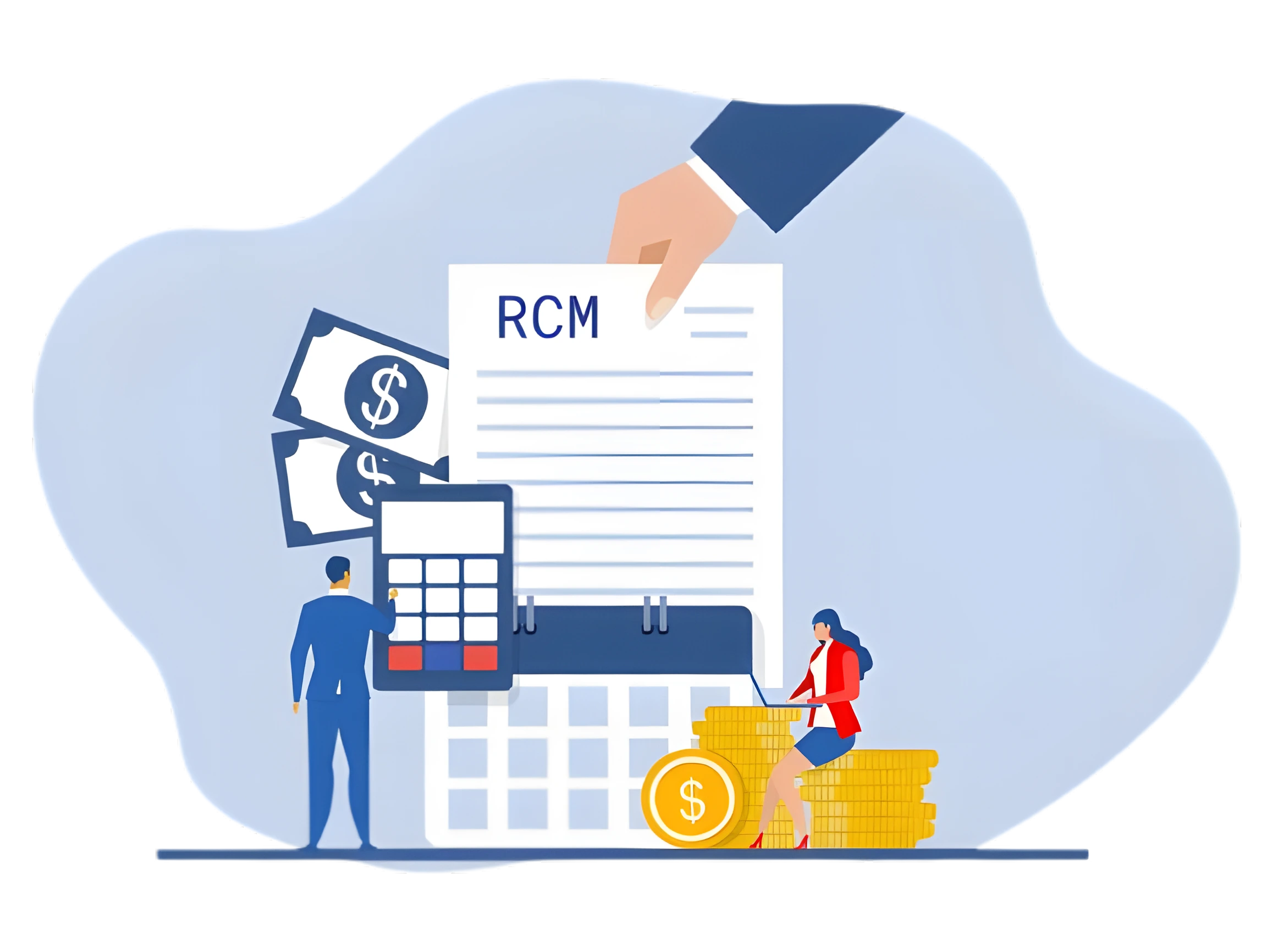






Understanding tax responsibility in the GST framework is very important to comply. Businesses are mostly confused by one such concept-name Reverse Charge Mechanism or perhaps referred to by its acronym-CBT. If you have been searching for "what is RCM in GST?", we are here to simplify the concept, the legal provisions, use cases, and advantages especially for small businesses.
In GST, Reverse Charge Mechanism, meaning the liability to pay GST is reversed from the supplier to the recipient (buyer) of goods or services. It applies to notified categories and cases, such as transactions with unregistered suppliers.
RCM is constituted by:
Sections 9(3) and 9(4) of the Central Goods and Services Tax (CGST) Act
Corresponding sections in the IGST Act
These provisions specify which goods and services are under RCM, and when businesses need to exercise this.
RCM applies under specific cases notified by the government:
Services by Goods Transport Agencies (GTA)
Legal services rendered by lawyers and law firms
Purchases from unregistered suppliers
Import of goods or services
Specified categories such as security servic
Always keep an updated list of goods/services subject to RCM, as the list keeps changing through inconsistent government notifications from time to time.
Tax Liability: Shifts from seller to buyer
Invoice Type: There is a unique characteristic that the buyer generates self-invoice and payment voucher
Registration Requirement: If the person is unregistered and receives supplies on which RCM is applicable, he or she shall take registration under GST
Input Tax Credit (ITC): Buyer can take credit of tax paid under RCM subject to fulfillment of conditions
Identification of RCM Transaction:Check if the purchase comes under notified list
Computation of GST: Charge what tax rates are applicable on the value of the transaction
Payment of GST to the Government: Through use of Form GST PMT-06
Documentation: Self-invoice (only for unregistered suppliers)
Record the Transaction: Make an entry in your books
Ensures Clearer Taxability:Ensures the buyers understand their tax liabilities
Reduces Evasion: Direct payment of tax restricts fraud
Improves Compliance: Ensures maintenance of proper documentation and records
Helps in Budgeting: Enables easy projection of its tax liabilities
Avoids Litigation: Less possibility of getting into penalties or scrutiny
| Feature | Normal GST | Reverse Charge Mechanism (RCM) |
|---|---|---|
| Tax Paid By | Supplier | Buyer/Recipient |
| Invoice Type | GST Invoice | Self-Invoice, Bill of Supply |
| Commonly Used In | Regular B2B and B2C sales | Government-notified transactions |
| ITC Claimed By | Seller | Buyer (after tax payment) |
| Documentation | Standard Invoicing | Self-invoicing, payment vouchers |
Yes, the Input Tax Credit can be claimed under RCM, subject to:
Accurate maintenance of records
Timely GST payments
Filing GST returns with RCM details
Failing to comply with these will lead to disallowed ITC and penalties.
| Challenge | Solution |
|---|---|
| Complex GST Rules | Use checklists and consult GST professionals |
| Cash Flow Disruption | Plan taxes in advance and allocate budget |
| Record-keeping Burden | Digitize documents and automate using accounting software |
| Tax Calculation Errors | Use GST-compliant billing tools |
| Regulatory Updates | Subscribe to GST newsletters or use updated tax software |
RCM Transaction Identification:Highlights RCM entries for easy classification
Tax Calculation Automation:Reduces human error by applying GST rules automatically
Centralized Document Storage:Maintains self-invoices, vouchers, and receipts
User-Friendly Interface:Helps even non-accounting professionals manage RCM
Integrated GST Filing:Includes RCM data in monthly returns seamlessly
Reverse Charge Mechanism is more than a legal obligation—it’s a strategic necessity for tax-compliant, well-managed businesses. For small and medium enterprises, staying on top of RCM rules means better control over cash flow, fewer compliance issues, and peace of mind during audits. By using smart tools like Sleek Bill, businesses can easily manage RCM, file accurate returns, and claim eligible ITC without hassle.
 GST Export Invoice Format
Requirements for export invoice templates in GST.
 Credit Note Format
Why Need Credit Note?

Requirements for composition scheme documents.

GST features in online billing software.

Requirements for export invoice templates in GST.

Receipt of items or services for GST Exempt.




RCM is a tax mechanism where the recipient of goods/services pays GST instead of the supplier.
The buyer or recipient of notified goods/services is liable to pay GST under RCM.
Yes, if all documents are maintained and returns filed correctly.
Yes, if they receive supplies that fall under RCM categories.
GTA services, legal services, import transactions, and purchases from unregistered suppliers.
 Free training &
support
Free training &
support 60K Happy Customers Worldwide
 Serious about Security & Privacy
Learn how manufacturing inventory software streamlines production workflows, enhances inventory accuracy, reduces operational costs, and boosts profitability through real-time tracking, automation, and smart forecasting.
*Free & Easy - no hidden fees.