Understanding GST and Its Importance in CA Practice
With the implementation of GST (goods and service fees), companies and chartered accountants (CAS) require intensive expertise to ensure compliance, reduce tax obligations and increase financial accuracy. The GST training provides CASS's extensive knowledge of tax rules, which is able to offer them professional and accurate consulting services and expand their practice.
What is GST?
Good Service Tax is an indirect tax that replaces to several taxes such as excise duty, service charge and value added tax. It was passed by government on 29 March 2017 and came into effect on 1 July 2017.
Why Was GST Implemented?
The Kelkar Task Force on Indirect Taxes (2000) proposed GST to:
-
Replace complex tax structures with a single tax.
-
Eliminate cascading taxes.
-
Improve compliance and economic integration.
Key Benefits of GST Training for CAs
-
Accurate tax compliance
-
Higher registration threshold
-
Simplified online filing
-
Composition scheme benefits.
-
Improved logistics & business efficiency.
Types of GST in India
-
1
CGST – Central Goods & Services Tax
● Levied on intrastate transactions.
● Governed by the CGST Act, 2017.
-
2
SGST – State Goods & Services Tax
● Levied by state governments.
● Revenue collected remains within the state.
-
3
IGST – Integrated Goods & Services Tax
● Levied on interstate supplies.
● Applied to imported/exported goods & services.
-
4
UTGST – Union Territory Goods & Services Tax
● Levied in Union Territories without their own legislature.
Role of the GST Council
The GST Council is responsible for:
Setting tax rates and exemptions.
Defining compliance timelines.
Overseeing tax laws & reforms.
Core GST Concepts for CAs
Supply in GST
Who is a Taxable Person?
A taxable person under GST includes:
Businesses
Sole traders
Professionals
Any entity responsible for collecting VAT/GST
Understanding Input Tax Credit (ITC)
ITC allows businesses to claim credit for GST paid on purchases. Example:
Tax on output: ₹900
Tax paid on inputs: ₹600
GST payable: ₹300(₹900- ₹600)
Reverse Charge Mechanism (RCM)
Under RCM, the recipient pays GST instead of the supplier. Applicable when:
● Buying from unregistered sellers.
● Receiving services from lawyers & transport agencies.
● Conducting specific e-commerce transactions.
GST Training and Certification for CAs
Online GST Training Courses Ideal for:
● Tax consultants
● Finance professionals
● Accountants
Composition Scheme for Small Businesses Eligibility
Turnover up to ₹1.5 crores. GST Rate:
● 1% for manufacturers/traders.
● 5% for restaurants (without alcohol).
● 6% for service providers.
GST Registration & Compliance
Who Needs GST Registration?
Documents Required
● PAN card
● Business proof
● Bank details
Filing GST Returns
GST E-Invoicing
Mandatory for businesses above ₹5 crores turnover.
Latest GST Updates – Budget 2025
Amendments in ITC Claims
Why GST Training is Essential for CA Growth
Expand service offerings with expert GST knowledge.
Attract more clients by ensuring compliance and tax efficiency.
Increase revenue potential by offering advisory services.
Leverage automation for better efficiency and accuracy.
Final Thoughts As GST laws evolve, CAs must stay updated with training and software automation. With expertise in GST compliance, ITC claims, and tax filing, CAs can enhance their practice and gain a competitive advantage. Start your GST training today and grow your CA practice with confidence!

 Call For Demo 9168696091/92/93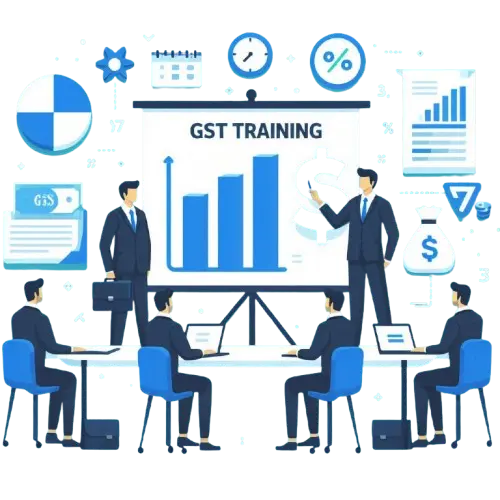







 Call Back Request

 GST Invoice Format
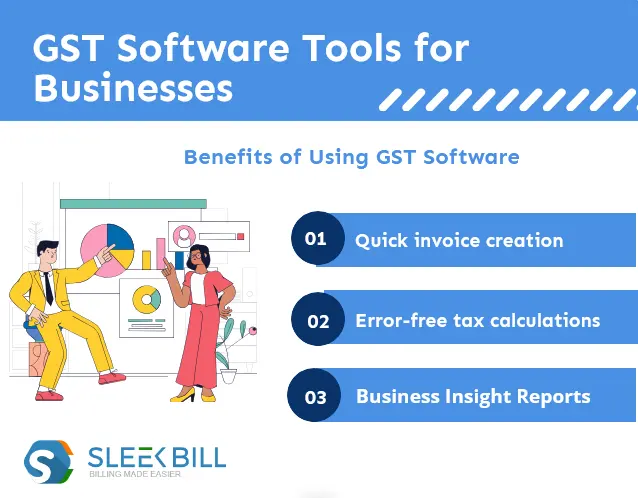
 GST Billing Benefits


 GST Credit Note
 GST Online Advantages








 Free training & support
 60K Happy Customers Worldwide
 Serious about