






If you run a business registered under GST in India, you’ve probably come across the term “bill of supply.” This document comes into play when you’re not allowed to charge GST on your goods or services. You issue it for sales of GST-exempt items, like fresh fruit or educational services, or if you’ve chosen the GST Composition Scheme. With the Composition Scheme, you pay tax at a fixed rate, but you’re not allowed to collect GST from your customers.
What is a bill of supply?
A Bill of Supply is what businesses hand out when they’re selling goods or services that don’t get taxed under GST, or if they’re signed up for the GST composition scheme. It’s not like a tax invoice—you won’t see any GST charges on it since those transactions aren’t taxed.
It’s a pretty straightforward document, but it really matters. It keeps your records straight, makes sure you’re following the rules, and just adds a touch of professionalism to the whole process.
Who should issue the Bill of Supply?
The registrants listed below should issue Bills of Supply:
Composition Dealers
Under the composition scheme, if you're a dealer whose turnover is less than 1.5 million Rupees, you can register under the composition scheme. The intent is to alleviate the burden of being compliant with GST and to simplify the taxation process.
However, the trade-off for using the composition scheme is that you can't pass on the cost of the tax to your customers. Meaning, you cannot charge the Goods and Services Tax (GST) to your Customers on your invoices. You will pay tax directly out of your own funds as a fixed percentage of your total turnover. Since you will not be collecting GST from the customer, you will issue a Bill of Supply not a tax invoice.
Exporters
Typically, if you sell your products or services outside Canada, they are considered exports, and thus, they do not attract Canadian GST. As there is no tax element on an export invoice, it is acceptable for exporters to use a Bill of Supply.
To ensure that all transactions are compliant, it is essential for an exporter to include one of the following statements on their documents stating the tax status of the transaction:
- "Supply intended for export on the payment of IGST" or
- "Supply intended for export under bond or letter of undertaking without payment of IGST".
Suppliers of Exempted Goods
Goods or services that a business is engaged in and for which there is no tax liability because there is an explicit exemption from tax for them may not charge GST when invoicing those goods or services (i.e., a registered person supplying raw agricultural products). If there is no tax on the sale of raw agricultural products, then the vendor must issue a Bill of Supply versus a Tax Invoice when making that sale.
What Should A Bill Of Supply Contain?
Based on the government regulations, a bill of supply under GST must contain the following:
- Name, address and GSTIN of the supplier: This legally identifies your business as the seller and displays your unique 15-digit Goods and Services Tax Identification Number for government tracking.
- Unique serial number for the financial year: This must be a consecutive, unique sequence (containing alphabets, numbers, or hyphens) specific to the current financial year to ensure seamless bookkeeping and prevent duplicate tracking.
- Date of issue: This marks the official transaction date, which is critical for determining the specific tax period in which the supply took place.
- In the case of registered recipient: Name, address, GSTIN of recipient.
- In the case of unregistered recipient: Name, address of recipient, address of delivery along with State Name and State Code.
- Serial number and date of the corresponding tax invoice (or bill of supply).
- Value of goods or services after discount or abatement: This reflects the final net amount the customer actually owes, calculated after deducting any trade discounts or government-approved price reductions.
- Signature or digital signature of the supplier: This serves as the final legal authorization, confirming that the business owner or an authorized representative vouches for the accuracy of the document.
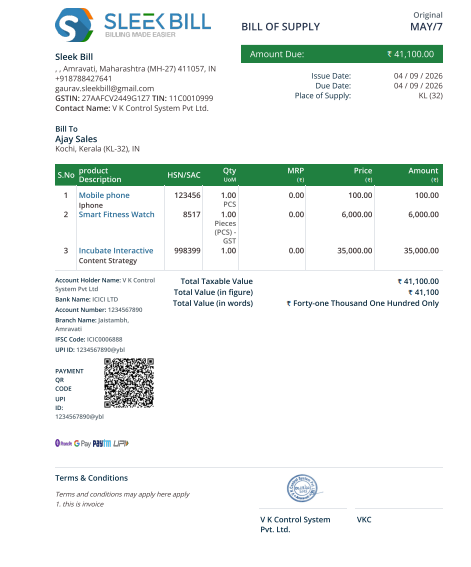
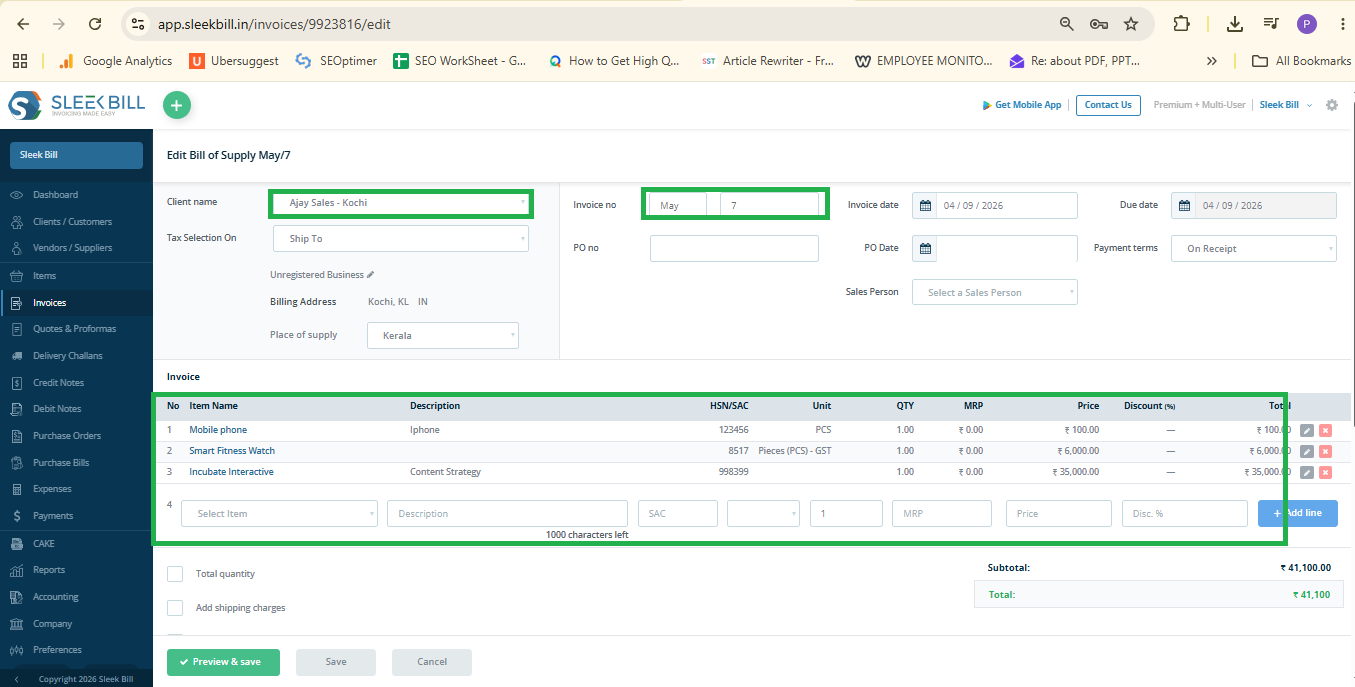
This is how a credit note made with Sleek Bill Online looks like:





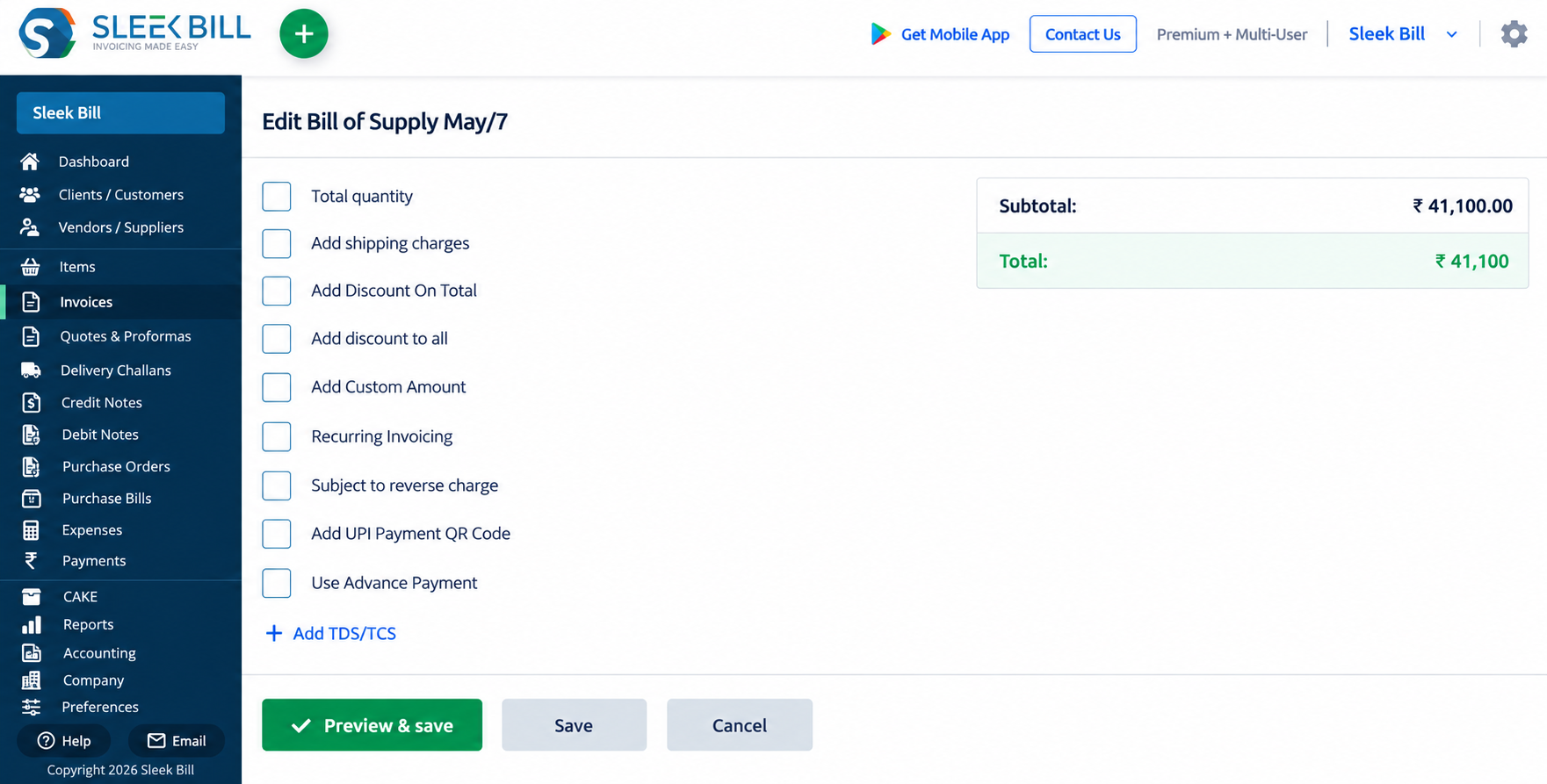
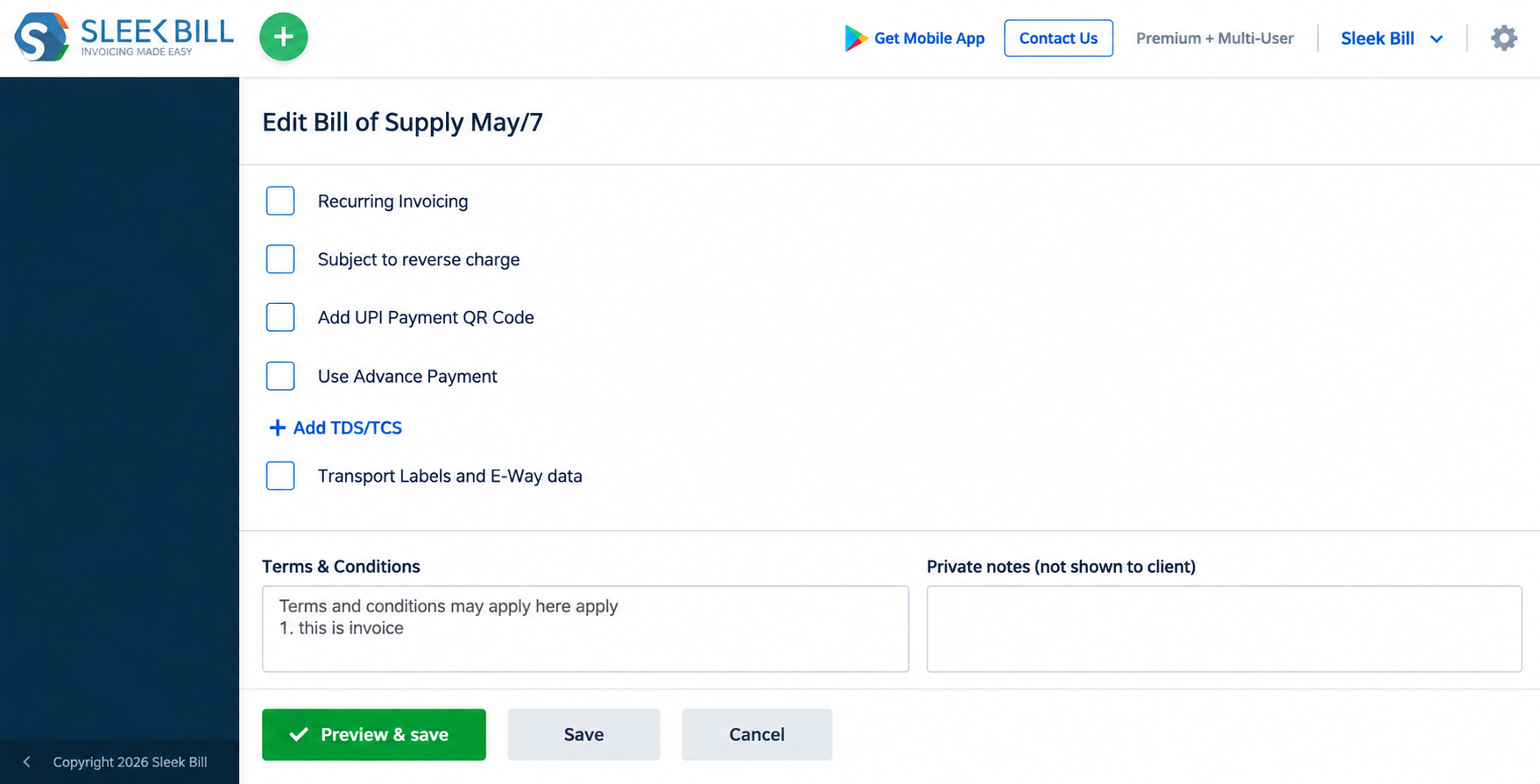



 +91 916-869-6090
 Faster Setup


